MemoHoney Official Website › Blog › Reading Product Badges
How To Read A Physician Formulated Badge
MemoHoney’s physician-formulated badge is a packaging representation to read narrowly. It does not disclose a dose, prove a finished-product study, or replace personal medical advice.
What the badge actually says
The MemoHoney artwork supplied to this site includes a physician-formulated badge. Read literally, the badge is a seller representation about involvement in a formulation. It is not automatically a biography, a credential file, an independent review, or a personal recommendation for every visitor who sees it. The small statement matters most when it is not inflated into a larger one.
The supplied product pack does not identify the physician, specialty, role, date of involvement, or method used to formulate the product. It also does not show a Supplement Facts panel with milligram amounts. The accurate sentence is therefore narrow: the artwork carries the badge. A stronger statement would require a named document or a disclosed person, neither of which was supplied to this desk.
This distinction matters in a memory category, where a title on a package can sound like advice about a symptom. The product is a dietary supplement. It is not an FDA-approved medicine, and the supplied support statements are not claims to diagnose, treat, cure, or prevent dementia, memory loss, or another disease.
| A badge can communicate | A badge cannot establish alone |
|---|---|
| A seller’s formulation representation | A named physician’s role or independence |
| A prompt to ask for documentation | A milligram amount missing from the label |
| A packaging statement | A finished-product clinical trial |
| A reason to read safety information | Personal suitability with medicines |
A badge can be meaningful yet incomplete. Ask what supports it rather than extending it by assumption.
What the badge does not establish
A formulation claim does not disclose ingredient amounts. The supplied artwork names L-Arginine, L-Arginine AKG 2:1 Extract, L-Citrulline HCL, L-Citrulline Malate, Niacin, and Beta-Alanine, but prints no amount for any of them. A professional title on packaging does not let a reader compare one capsule with the gram-scale doses used in research on single ingredients.
It also does not establish that the finished MemoHoney formula has been clinically studied. Research on a molecule, research on another formula, and research on a particular finished product are different evidence. This site has not been supplied a trial of MemoHoney as a whole. The correct response is to state that limit, rather than to borrow certainty from a study that did not test this bottle.
Finally, a badge cannot decide whether a product is suitable alongside a person’s medicines or conditions. A pharmacist or prescribing clinician can consider the full medication list and the reason the person is considering a supplement. Packaging cannot perform that personal safety check.
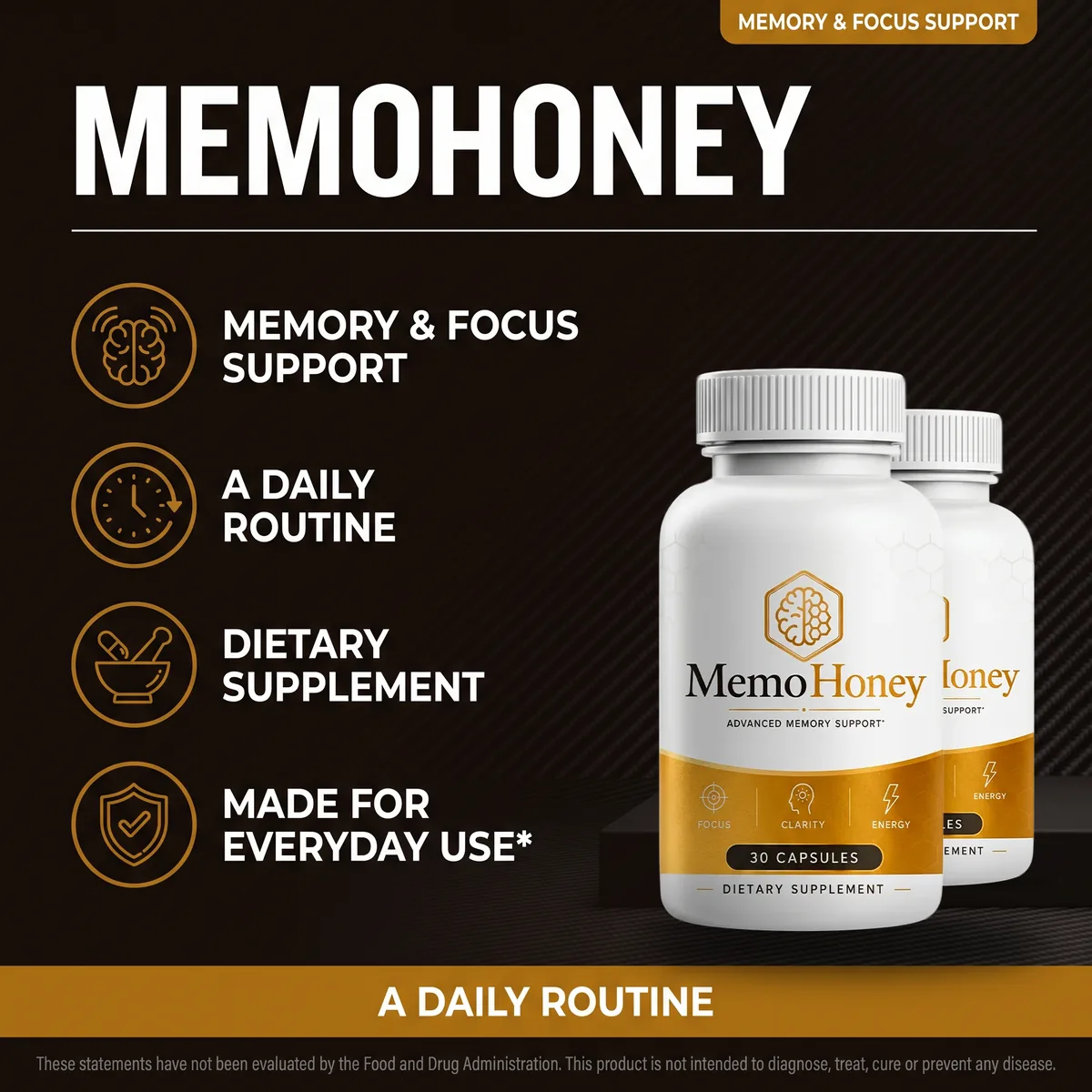
Read the badge beside the rest of the label
The rest of the supplied information is more concrete than the badge. It says 30 capsules, one capsule daily with a glass of water, preferably in the morning before a meal, and adults 18 and over should follow the label. It lists six ingredients. It does not state serving weights. These facts describe a thirty-day routine and an evidence limit without implying a treatment effect.
Other supplied graphics contain statements such as vegetarian friendly, good manufacturing practice, gluten free, dairy free, USA manufacturing, and satisfaction guarantee. Each has a different scope. A dietary-preference badge may matter to someone avoiding an ingredient. A manufacturing badge is not a released assay. A satisfaction graphic is not proof that a product will have the same effect for every buyer.
Reading claims by scope takes an extra minute, but it prevents a familiar marketing error: allowing several small statements to merge into one large implied promise. A careful label reader keeps each representation attached to what it actually says and looks for the document needed to support any claim that would change a purchase decision.
Ask for support, not reassurance
If the physician-formulated representation matters to a buyer, the useful request is specific. Ask whether the seller can identify the physician, describe their role in the formulation, state whether they reviewed the final ingredient amounts, and provide a current written document that supports the claim. A specific written answer can be preserved and weighed. A broad reassurance cannot.
No answer should be converted into a good or bad result by guesswork. It is enough to record that the supplied pack does not provide the detail and that a requested document was or was not made available. This is the same principle used for the missing amounts on the label: an absence of information is a limit on verification, not a licence to invent a dose or a clinical outcome.
The order desk can address ordinary service questions. The website contact can address page corrections. Neither should be asked to give individual medical clearance. When medicines, side effects, or a worrying memory symptom are part of the decision, the right conversation is with a pharmacist or clinician.
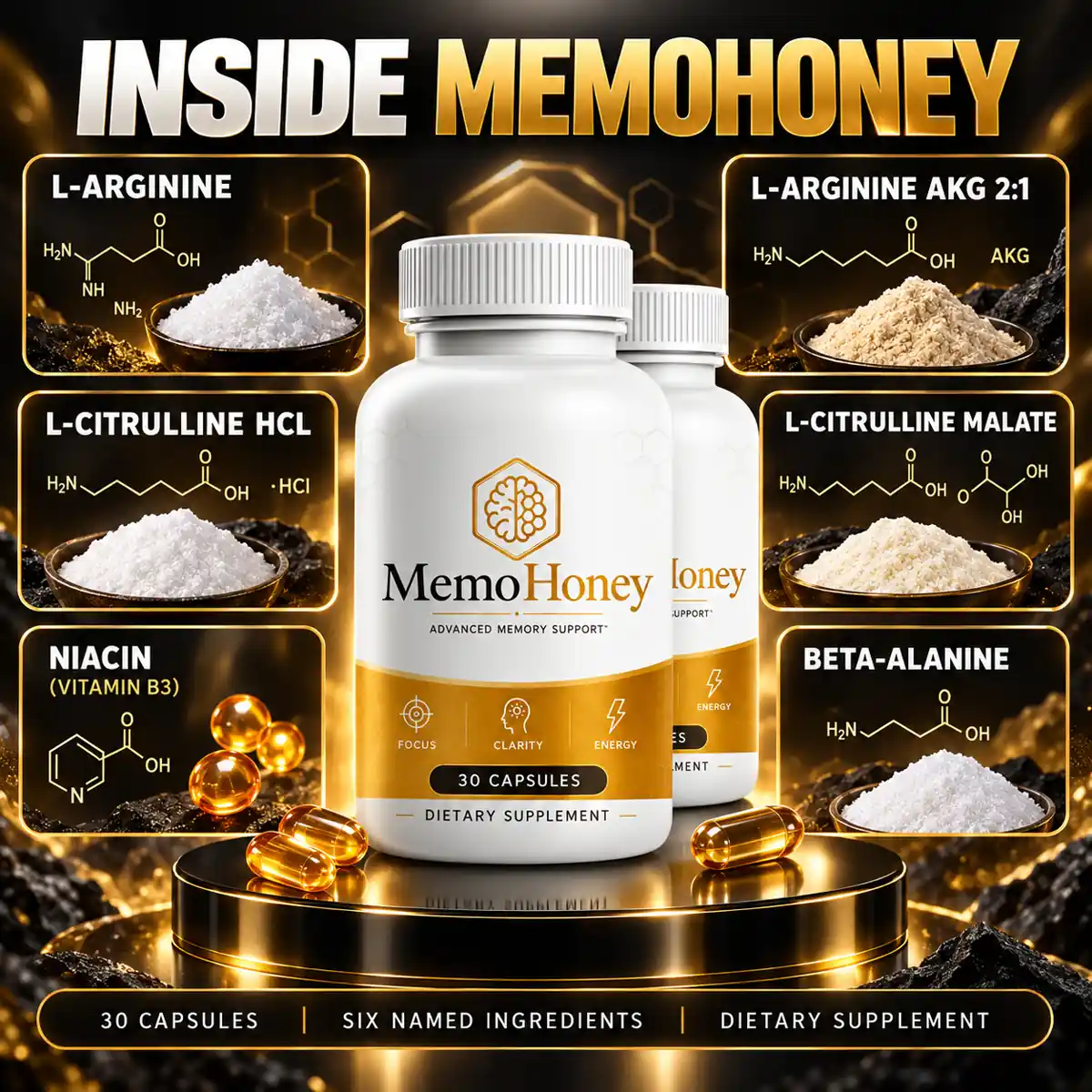
A doctor is not a badge
A buyer’s own doctor or pharmacist has a different role from a package claim. They can see relevant medicines, conditions, past reactions, and the reason a supplement is being considered. That context is especially important because the named ingredients include compounds with nitric-oxide-related research. Anyone taking a nitrate, a blood-pressure medicine, or a PDE5 inhibitor should bring the full ingredient list to the professional who manages those medicines.
Memory changes deserve the same distinction. Worsening forgetfulness, trouble with daily tasks, or a change noticed by family can have causes that need assessment. Sleep, mood, hearing, vitamin status, medications, and neurological conditions are not questions a product badge can evaluate. A supplement article can explain its own label. It should not delay appropriate care by sounding like a diagnosis.
This boundary does not diminish the value of asking careful product questions. It makes those questions more effective. Retail information belongs with a retailer, product evidence belongs with the underlying documents, and personal care belongs with the person qualified to see the whole health picture.
Read the MemoHoney badge with the full label
A formulation badge is a reason to ask a precise question, not a substitute for a disclosed amount panel, a released study, or personal medical advice.
Two bottles $158 · six bottles $294 · 60-day money-back guarantee
Order MemoHoney On The Official WebsiteOne capsule a day · 30 per bottle · lot MEM-26/ME-3415
A better decision rule
Use the badge as one small item in a hierarchy. First, read the directions and named ingredients. Second, note what the label does not disclose, including amounts. Third, separate a support statement from a disease claim. Fourth, request documentation if the representation would change the buying decision. Fifth, ask a clinician or pharmacist about medical and medication questions.
The ingredients page keeps the six names in view. How to use repeats the supplied daily direction. Testing and quality sets out what this counter can and cannot verify from the materials provided. Together, these pages supply a better base for a decision than a fast scan of a single emblem.
A transparent decision is not one with no unanswered questions. It is one where the unanswered questions are visible, asked in the right place, and not covered by a stronger claim than the evidence supports. That is what a reader should take from a physician-formulated badge: a reason to look closer, not a reason to stop looking.
Keep evidence in order
A final evidence check keeps a badge in proportion. Ask which part of the claim is visible: the badge itself, a named person, a disclosed formula, a finished-product study, or a recommendation for an individual. Those are not interchangeable. The supplied artwork provides the first. It does not provide the other four, and a reader should not silently supply them from the word physician.
This ordering is useful across every supplement category. A polished seal, an expert title, a testimonial, and a familiar ingredient can all be reasons to ask a sharper question. They are not a substitute for the label, a dose disclosure, or a professional who knows the buyer’s medicines and symptoms. Keeping the evidence layers separate makes a decision calmer and more reversible.
The practical test is simple: would the claim still make sense if it were written as a plain sentence without the badge design around it? If not, ask what document or fact is missing. That question respects the representation without granting it more authority than the supplied material supports.
- A physician-formulated badge is a packaging representation, not a personal recommendation.
- It does not identify a physician, disclose a dose, or prove a finished-product trial.
- Read badges alongside directions, named ingredients, and disclosure limits.
- Request specific documentation if the representation affects the decision.
- Use a pharmacist or clinician for medicines, symptoms, and personal safety questions.
MemoHoney is a dietary supplement for healthy adults of 18 and over. It is not a medicine, it is not FDA-approved, and it is not intended to diagnose, treat, cure or prevent any disease. Memory that is getting worse month by month, or that family notice before you do, deserves an assessment: thyroid function, vitamin B12, depression, sleep apnoea, hearing loss and several common medicines all produce the same symptom and all have a route to treatment that a capsule does not.
References
- U.S. Food and Drug Administration. Questions and Answers on Dietary Supplements. https://www.fda.gov/food/information-consumers-using-dietary-supplements/questions-and-answers-dietary-supplements
- U.S. Federal Trade Commission. Health Products Compliance Guidance. December 2022. https://www.ftc.gov/business-guidance/resources/health-products-compliance-guidance
- National Center for Complementary and Integrative Health. Alzheimer's Disease: At a Glance. U.S. National Institutes of Health. https://www.nccih.nih.gov/health/alzheimers-disease-at-a-glance
- Hersant H, He S, Maliha P, et al. Over the Counter Supplements for Memory: A Review of Available Evidence. CNS Drugs. 2023;37(9):797-817. PMID 37603263. https://pubmed.ncbi.nlm.nih.gov/37603263/
- Geller AI, Shehab N, Weidle NJ, et al. Emergency Department Visits for Adverse Events Related to Dietary Supplements. N Engl J Med. 2015;373(16):1531-40. PMID 26465986. https://pubmed.ncbi.nlm.nih.gov/26465986/